

Year: 2026
-
Low-Carbon Basic Materials
Learn more: Low-Carbon Basic MaterialsBasic materials such as steel, cement, chemicals and lime account for almost half of Germany’s industrial emissions. This poster sets out the options for decarbonizing their production. Five cross-cutting levers for industrial decarbonization are described: direct electrification, material circularity, energy efficiency, green hydrogen and PtX, and CCU/CCS. A case study then walks through the options…
-
Carbon Capture
Learn more: Carbon CaptureThis two-page poster provides an overview of the carbon capture, utilization, and storage (CCUS) value chain and its associated technologies. CO₂ can be captured from industrial point sources or directly from the air. Then, it can be used in industrial processes or permanently stored to prevent its release into the atmosphere. The poster compares three…
-
Hydrogen
Learn more: HydrogenThe potential contribution of hydrogen as a clean energy carrier to industrial decarbonization is outlined in this concise knowledge poster. It explains why hydrogen must be produced through dedicated processes and compares the main hydrogen production pathways through the commonly used color code. The poster then focuses on green hydrogen, presenting the main electrolysis technologies:…
-
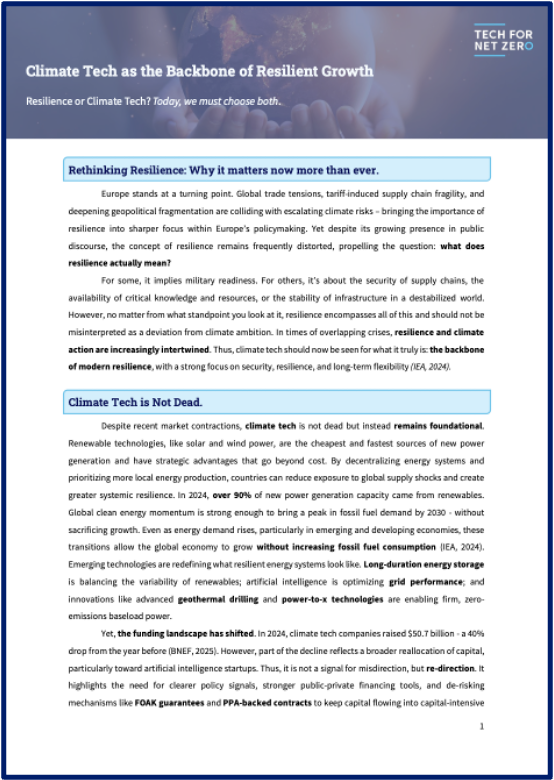
Climate Tech as the Backbone of Resilient Growth
Learn more: Climate Tech as the Backbone of Resilient GrowthClimate tech is not only essential for decarbonization but also a strategic pillar for Europe’s economic security and long-term competitiveness. As geopolitical pressures and climate risks intensify, clean technologies – from renewables to digital grid solutions – form the backbone of a resilient future. The paper calls for faster execution, clearer policy signals, and stronger…
-
A venture capital analysis of climate technology startup financing to 2030
Learn more: A venture capital analysis of climate technology startup financing to 2030The report, “Investing in Net Zero – A Venture Capital Analysis for Financing Climate Technology Startups to 2030,” highlights the investment opportunities for building and developing new climate technology startups that could deliver impactful technologies across all sectors of the economy in Germany. The analysis draws on detailed market forecasts to identify opportunities for climate…